Honestly feather comparisons are one of my most favourite things to do, so HECk to the YeCK
Sooooooooo! Feather pigment, strength, shine, and patterns tell us a LOT about a bird. Examining your birds’ feathers regularly is a super easy thing we can do to keep track of their health, they let us know if they’re stressed out, not getting enough light, eating improper diets, or have developed illnesses.
One of the most common things for parrotlet feathers is brown discolouration, it’s pretty obvious to see if it’s severe enough and if you know what you’re looking for it’ll stick out to you.
Mia’s was gnarly, when discolouration is caused by poor nutrition not only can newly developing feathers be affected but it can also cause existing ones to break more easily or be weaker in general which will cause them to brown or break the older the feather gets. A bird with inadequate nutrition may develop perfectly ‘fine’ looking feathers that turn brown over the next couple of months. This happens because the bird wasn’t given the nutrition necessary to actually grow the feather. In severe cases or cases where liver diseases and other illnesses are present the feather will grow in with discoloured pigment, in less severe cases the feather will be made the right colour but break down quicker causing them to develop the discolouration over time.
Mia had liver disease so her feathers were NASTY
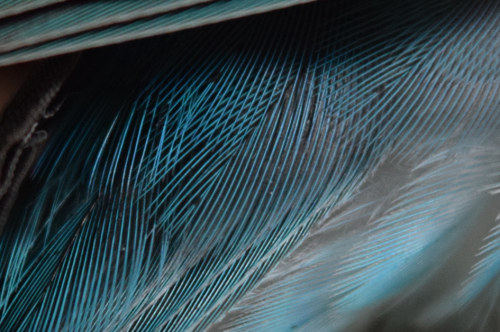
but when switched to pellets+ fresh fruits/veg/sprouts they all came in blue (it took two moults for them to come in blue and stay blue, because of the liver disease they’d get speckled with brown as the feathers deteriorated since her body was still combating liver disease when they grew in)
Here’s an example of that speckling (sorry I didn’t have many photos of it this is the best I’ve got, just those little black specks of brown/ black)
Newt is a prime example of poor nutrition causing the feathers to turn brown after they’ve been made. When we first got him his feathers seemed fine, the difference between these photos is one month!!! because the feathers were produced with poor nutrition they broke down and discoloured quicker than his body could moult out and make new ones
April:
May:
Since the feathers were made with poor nutrition it didn’t take much for them to break down which is why they looked healthy when they came in but quickly became damaged and turned brown. He was fed nothing but seed for the first year of his life which contributed to this problem.
Another common issues is stress bars, these often form during the growth of the feather appearing as either a cut through the feathers’ filaments or as a discoloured (usually pale) band across the width of the feather.
(example of a ‘cut-style’ stress bar)
In some cases nutrition causes stress bars to occur, generally this happens on flight feathers (tail + wing) more than the contour feathers. Flight feathers take a lot more material to make, they have to be strong enough to hold their shape against wind resistance and hitting objects so signs of nutritional deficiencies are more notable. Since it takes so much more to produce a healthy flight feather when something’s missing nutritionally it shows here pretty strongly (as opposed to a body feather that requires less energy/ nutrients to produce, if you’re missing a couple things it’s less likely to show in the feather)
(example of the ‘pale-style’ stress bar)
In this case the cause of the bar was stress. When developing the feather if a bird becomes overwhelmingly stressed the hormone corticosterone inhibits the body’s ability to synthesize nutrients correctly. The effect of this is the bird being incapable of producing a healthy feather so they make one with discoloured pigments and usually a weaker structure (notice how the feather with the band is also entirely thinner and the edges are frayed throughout it). This can happen on any feather in severe cases but most commonly it occurs on the flight feathers (wing+tail).
Next is the overall shape and strength of a feather, this can be hard to tell if you’ve never seen your bird any different or have no reference to go by. A lot of birds actually have a very weak feather structure and no other obvious signs that there’s something wrong with their health from an outside perspective. Newt is my best example for this, he was fed all seed by his previous caretakers and as a result his feathers were very flat and dull. Colour-wise they seemed fine! no discolouration or major issues initially but once he moulted it was obvious just how weak the feathers were before
(flat feathers, fraying edges all along his tummy)
(puffy healthy feathers, strong shape, strong curve to them, the edges are holding together)
UV LIGHT!!!! so incredibly important and hardly anyone knows about it, the way to tell if a bird is lacking UV light is by the shine on their feathers as well as the flakiness of their beaks. UV is super important for calcium absorption and honestly? most of the time unless you’ve got a reference image you won’t realize that they’re lacking.
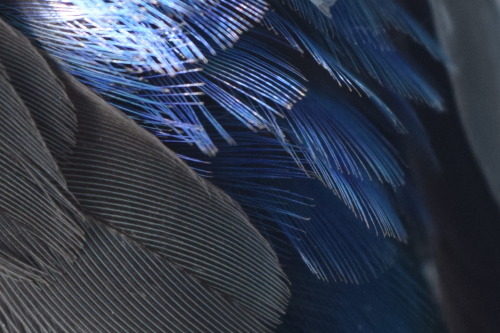
Mia’s feathers before/after using UV light (about a month’s difference):
It’s hard to actually pinpoint what I’m trying to focus on here because when Mia got the UV she was also recovering from liver disease. So! what I’m trying to point out isn’t so much the colour but the shine on the feathers. Her rump before is still blue but it’s dull, the feathers are matte, there’s no definition to them. After the UV the feathers are SO SHINY they’re iridescent looking, and vibrant. That glossy appearance and iridescence is really the most notable change for feathers when it comes to UV usage. It’s just unfortunately quite difficult to photograph!
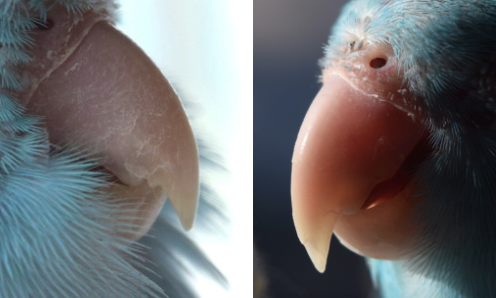
Mia’s beak before/after UV light (the lighting in the photos is different, the thing to focus on his the flakiness of the beak). It’s important to note that birds do continually grow their beaks so it’s normal to see some layers growing and old ones flaking off (note the tip of the beak on the right is growing new layers) but that constant pale flakiness you see on the left should not be that way all year round.
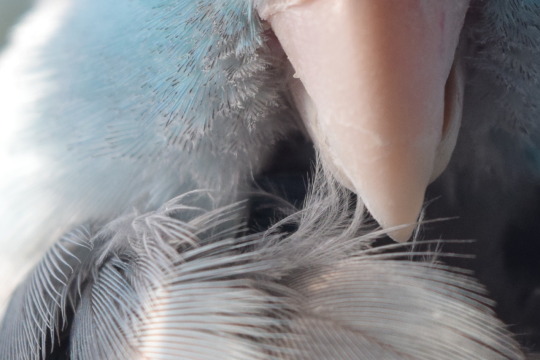
Soooooo the last thing I’m going to talk about is breakage, Mia’s was really terrible because of the liver disease she had completely snapped in half tail feathers because they were so weak. But all of her little cheek feathers were also terribly damaged, the feathers broke first and then the discolouration formed afterwards, when a feather breaks that’s just sort of what happens. The edge where the feather broke will go brown.
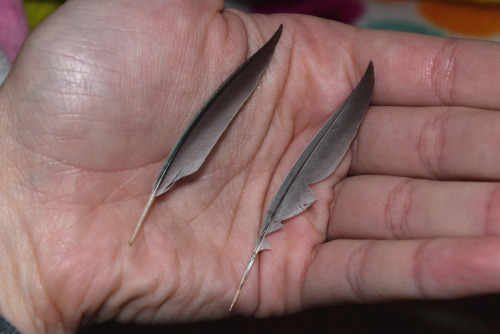
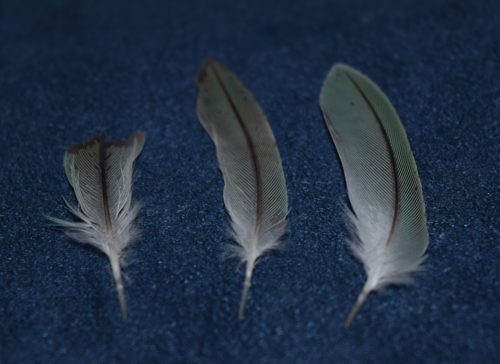
But! this photo gives me something else to point out and helps make a couple previous points more obvious. Obviously the first feather is one that was so far gone it was weak and it snapped, as a result of breaking the damaged edges of the feathers discoloured. It’s very common to see broken feathers develop a brown/ discoloured edge along the break after the break has occurred.
but what I want to note here is the difference between the last two feathers, even though it’s been moulted out, it’s an old feather the body doesn’t want anymore that last feather is still strong, the filaments are all still holding together, the colour is good (aside from those couple tiny dots that I explained earlier), it’s a healthy feather overall. The one in the middle is terrible, it’s weak, the edges can’t hold together, the filaments are frayed. moulted feathers should not look trashed which is a very common misconception. Just because the body doesn’t want the feather anymore doesn’t mean the feather should look like garbage. A healthy bird should still be moulting a healthy feather. It shows that the bird was given enough nutrition to form a feather to last it’s intended lifespan, if the feathers are always coming out looking tattered odds are they are not fully meeting their nutritional requirements.
Majority of the problems are all nutrition-related, simply feeding a proper diet, increasing calcium, and making sure they have a good UV light are all going to help a bird grow a strong, healthy feather. There are cases where discolouration can be related to other diseases, different illnesses may cause feathers to go pale, liver disease may present itself as brown but can also turn feathers bright yellow depending on the bird and severity of the disease, more severe illnesses can make birds suddenly drop feathers, not grow them back and different ones cause them to grow in twisted or malformed. If you ever notice any discolouration or unusual markings/ breaking/ development issues with the feathers a vet should be the first step to ensure it isn’t cause by an illness.
So there you have it, a way-too-long spiel on why examining a birds’ feathers is important, even the tiniest of brown specks can signify that something needs to change!
Soak greens for 20-30 minutes, then add birds and allow to marinate overnight…




 Flock of Wolfes