Keeping nails an appropriate length is essential for good foot health, believe it or not there are quite a few side effects of letting nails get too long!
Severely overgrown nails can turn in on themselves and puncture the foot or damage the root of the nail
Overgrown nails can deform the foot as the bird is forced to sit with sideways toes
They can lead to scale deformities or irregularities
The quick can overgrow resulting in a higher risk of bleeding during nail trims
Increases the odds of developing bumblefoot, arthritis, and other common foot problems
Long nails are prone to getting caught in materials which often result in broken or dislocated toes or legs
So how do we know if a nail is getting too long?
The most common answer is to look at the quick, there’s a small vein which runs through your bird’s toes to the nail. The quick can be easily seen in most white-nailed species, holding them up in front of a light will usually expose the vein, a decently sized nail should only be a few millimetres longer than the quick.
But what about in species where you can’t see the quick?
If you can’t see your bird’s quick the best way to tell is to have them stand on a flat surface and look at the pads of their feet,
a nail which is too long will cause the pads of the feet to raise off the ground,
An appropriately sized nail will have the pads flat on the ground, maybe just a little bit lifted
During this process the bird should be completely relaxed, a bird who clenches their feet on the surface will give the illusion of an overgrown nail so try to observe them when they’re calm and comfortable on a flat surface.
It’s really crucial that black-nailed species have their nails maintained otherwise the quick will grow past it’s normal region making it easier for you to cut in to it.
Being able to see these veins puts you at an advantage, these veins are quite thick and can pump out quite a bit of blood, cutting in to it can result in a lot of blood loss and stress. In the instance you do cut in to this vein it’s important to have some flour or corn starch on hand to clot the blood, you can also use quick-stop varieties but do be cautious as some brands can actually sting!
It’s best not to use human nail clippers as the flat surface can splinter the nail resulting in infections or other foot problems down the road, if you choose to file your bird’s nails it’s best to use fine-grained files as to reduce stress on the toes as you file.
If your bird is not trained to allow nail trims you’ll need to restrain them with a bander’s grip and/or a towel, using the most convenient fingers to hold the foot still while the other hand trims the nails.
If you at all feel uncomfortable about any aspect of nail trimming it’s best to go to your veterinarian or reputable location to have them show you how to trim the nails so you can become more comfortable doing it. It’s very easy for the bird to kick or for you to cut too far up the nail resulting in injury, better to get it done properly the first few times than risk harming them!
I guess I should make a Nice List too because while birds are 90% pain inthe ass they are Nice 10% of the time (being generous here). BUT they are always 100% perfect.
– Birdloaves, B’orbs
– SOFT PEEPING SOUNDS
-Ball tongues
-When the eyes move inwards to focus then outwards to look like a spaced-out doof
-fluffenchops with the head tilt
-beak grinding
– using words and sentences in context/ making new sentences out of words they already know
– birdy kisses
-warm dusty bird smell
The Googley eyes
Bird pants and bird cleavage
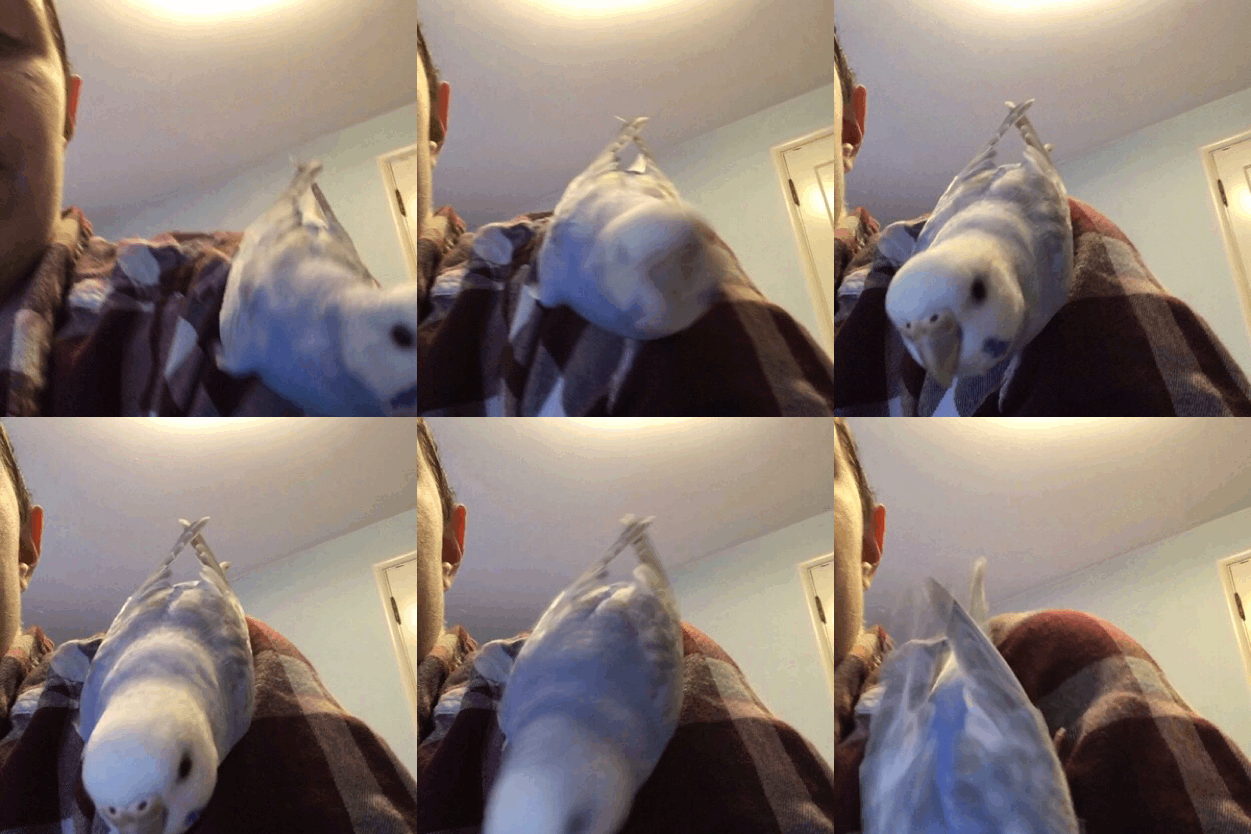
When they walk on you and you feel their weight and their little feets
When they stop what they are doing to kiss and preen you
The pre-sleep chirp session
The way they watch you when they are up some place high up
When they get soaking wet from a REALLY through bath/shower
When they admit the food is good after attacking it
When the fearful or standoffish ones get close on their terms for the first time
– wet bird smell
– when they fall asleep on you
– asking for scritches
– the “i’m happy you’re home” chirp
Am master interior designer.
You cannot resist fluffenchops!
[It’s bed time and she refused to go in her cage. Apparently she thinks she’s sleeping on the front porch tonight.]
[Holy crap! 500 people who enjoy seeing stupid pictures/videos of my bird! What insanity!! Thank you all so much. <3]
Due to acquiring a pigeon last night, somewhat unexpectedly, due to a friend losing their residence I need some help/advice. The friend is currently uncontactable.
Can you recommend a) a commercial well rounded pigeon feed I’m likely to be able to get locally in Birmingham, UK or b) a stop gap while I sort a suitable diet.
I was already beginning to learn about pigeon care just in case, I know pigeons have seed based diet, I just, want to make sure to feed an actual balanced diet as it were.
@tinysaurus-rex I know you aren’t in the UK but are the only pigeon person I’m aware of.
I believe most outdoor bird food is ok for them a long with dried peas & lentils. I don’t own any pigeons so I don’t know a ton about them. If anyone has any tips please help.





 Flock of Wolfes

